
Remember Google Glass? That slightly awkward, kind of nerdy headset that launched back in 2013 and promptly became the internet’s favourite punchline? People called it creepy. Restaurants banned it. The guy wearing one in public got a nickname nobody wanted — “Glasshole.”
Well. A lot has changed.
Smart glasses in 2026 look nothing like that. They look like your favourite pair of sunglasses. They sit comfortably on your face. They don’t scream “I am wearing a computer on my head.” And quietly, without much fanfare, they’ve gone from being a tech industry joke to the most hotly contested product category in consumer electronics.
Every major tech company on the planet — Meta, Google, Apple, Samsung, Xiaomi, Huawei — is currently racing to own this space. And the numbers back up why. Global smart glasses shipments surged by around 110% in just the first half of 2026. The market was valued at over $2.4 billion in 2026 and is projected to hit $14.3 billion by 2033. This isn’t a niche gadget moment. This is the beginning of a proper shift in how we interact with the world around us.
So what exactly are smart glasses, what can they actually do, and should you care about them right now? Let’s get into it.
Table of Contents
What Are Smart Glasses, Really?
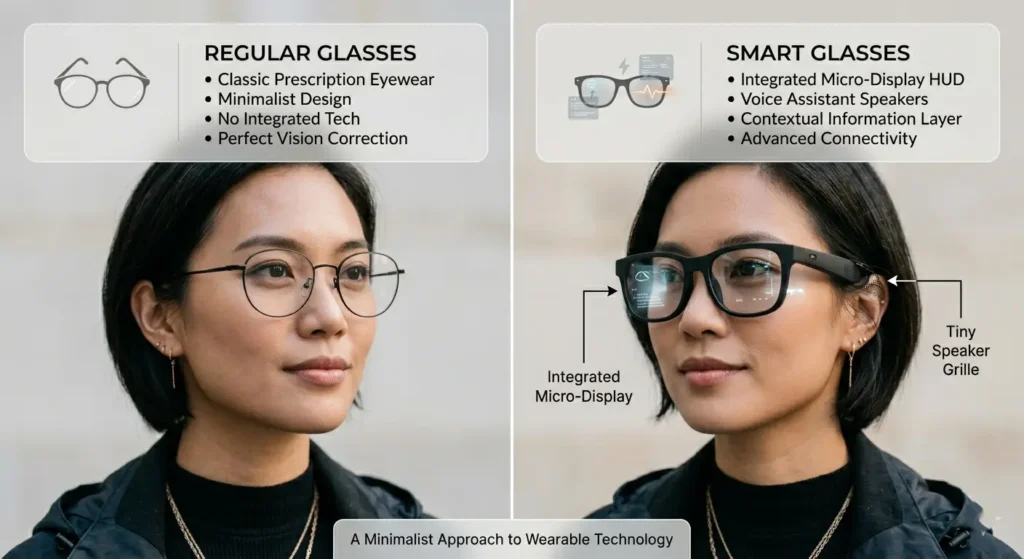
Let’s clear up a common confusion first. Smart glasses are not VR headsets. They’re not the big, face-covering devices like Meta Quest or Apple Vision Pro that block out your surroundings entirely.
Smart glasses are wearable eyewear — they look like regular glasses or sunglasses — but they have technology built directly into the frame. Depending on the model, that could mean built-in speakers, a camera, microphones, an AI assistant, a small display projected onto the lens, health sensors, or some combination of all of the above.
The whole point is that smart glasses add digital intelligence to your field of vision without taking you out of the real world. You’re still walking around, having conversations, navigating streets — but now you have information, assistance, or enhanced experiences layered quietly on top of that reality.
That’s the key difference between smart glasses and a VR headset. VR replaces reality. Smart glasses enhance it.
Why 2026 Is the Year Smart Glasses Finally Got Serious

For years, smart glasses were a technology that was always “almost ready.” The hardware was too bulky. The battery died in an hour. The features were gimmicky. The design made you look like you were auditioning for a low-budget sci-fi film.
That’s genuinely no longer the case.
Two things changed everything. First, miniaturization — the process of making components dramatically smaller — finally reached a point where powerful chips, cameras, and displays could be packed into something that actually looks like a normal pair of frames. Qualcomm’s Snapdragon AR1 Gen 1 chipset, for example, processes images and audio on-device without needing to constantly talk to your phone. That means smoother performance, better battery life, and real privacy.
Second — and this is the bigger one — AI grew up. The integration of AI assistants like Meta AI and Google Gemini into these glasses transformed them from novelty items into genuinely useful tools. These aren’t just glasses that play music anymore. They can have a conversation with you. They understand what you’re looking at. They can translate text in real time, give you navigation directions, summarize a meeting, or tell you who that person walking toward you is — if you want them to.
Meta’s Ray-Ban smart glasses, arguably the product that mainstreamed the category, had their AI assistant process over 100 million queries per month as of mid-2026. That’s not a niche number. That’s mainstream adoption happening in real time.
What Can Smart Glasses Actually Do?
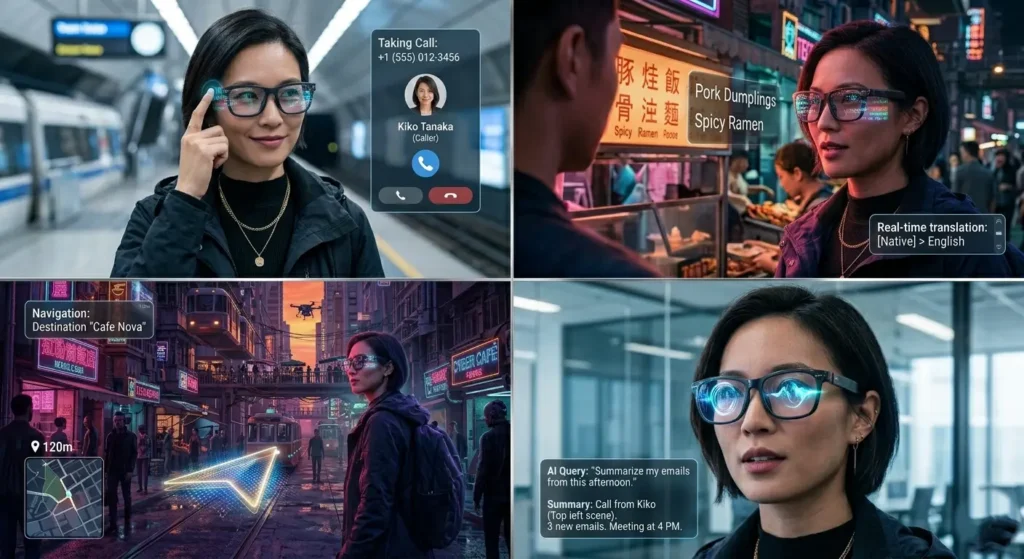
This is the question that matters most for anyone thinking about buying a pair. So let’s be practical about it.
Hands-Free Calls and Music

The most basic — and honestly the most universally useful — feature of smart glasses is open-ear audio. Built-in speakers let you take calls, listen to music, and interact with a voice assistant without putting anything in your ears. You stay aware of your surroundings, which is a significant safety and social advantage over earphones.
For commuters, cyclists, runners, and people who spend a lot of time in meetings — this alone is worth paying attention to.
AI Assistant — The Feature That Changes Everything

Modern smart glasses don’t just hear your voice commands. They see what you see. With a built-in camera and AI, they can look at a menu and translate it into your language. They can look at a product and tell you its price elsewhere. They can look at your surroundings and give you relevant, contextual information without you having to pull out your phone.
Meta Ray-Ban Display smart glasses, for instance, feature a 12MP camera, real-time AI translation, live captions during conversations, and two-way video calling — all without you touching a single button. You ask, your glasses respond.
This is what sets modern smart glasses apart from everything that came before. They’re not just input devices. They’re genuinely intelligent.
Augmented Reality — The Next Frontier
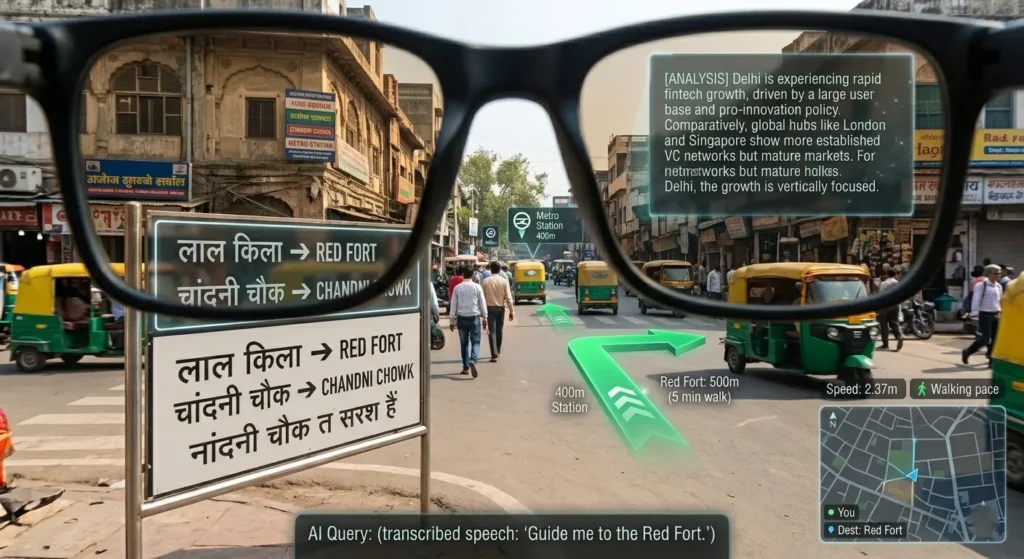
AR smart glasses take things further. Instead of just audio and AI assistance, they overlay digital information directly onto your field of vision through a tiny display embedded in the lens — called a waveguide display.
Imagine walking through a new city and seeing navigation arrows floating in front of you as you walk. Or reading a foreign-language sign with a real-time translation appearing above it. Or checking your messages and notifications without reaching for your phone, just by glancing slightly upward.
Companies like Xreal, Even Realities, and Google (with their Android XR platform) are developing AR smart glasses that make all of this happen in a device that looks unremarkably like a pair of sunglasses. The Even Realities G2, for example, features Micro-LED waveguide displays on both lenses, packed into a design slim enough that most people wouldn’t even know you’re wearing tech.
Health Monitoring
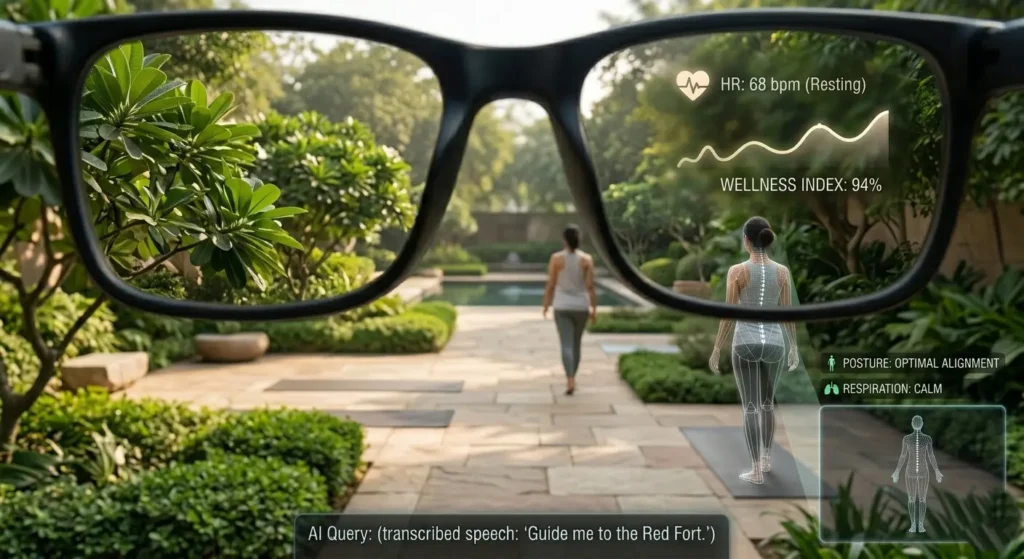
Here’s one that not enough people are talking about. Smart glasses are increasingly incorporating health sensors that can track heart rate, monitor posture, detect signs of fatigue, and even flag early indicators of conditions like diabetes or hypertension through biometric readings.
For older users especially, These glasses with health monitoring could function as a continuous, non-intrusive wellness companion — something that watches out for you in the background without requiring you to strap a device to your wrist or chest.
Researchers are also exploring integration with broader health ecosystems — where your smart glasses talk to your fitness app, your doctor’s portal, and your nutrition tracker simultaneously to give you a genuinely holistic picture of your health in real time.
Photography and Content Creation
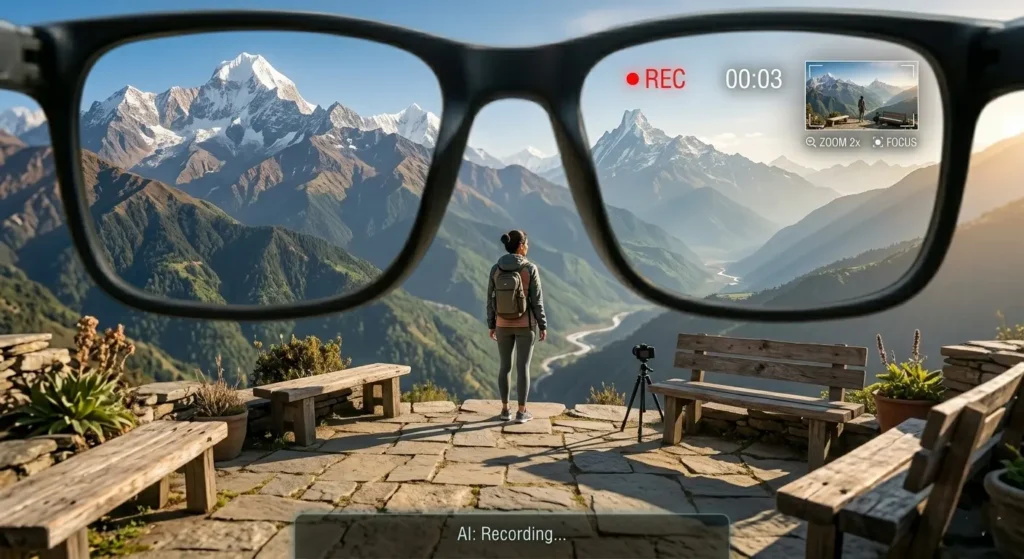
For creators, travelers, and anyone who wants to capture moments without spending three seconds fumbling for their phone, smart glasses with built-in cameras are a revelation. You’re recording from your own perspective, hands-free, at the exact moment you’re living it.
Meta’s Neural Band, paired with their Ray-Ban Display smart glasses, lets you capture photos and videos through hand gestures — no buttons, no phone, nothing between you and the moment.
Smart Glasses in Everyday Life — Not Just for Tech People

One of the biggest shifts happening right now is that These glasses are shedding their “tech bro” image and becoming genuinely mainstream lifestyle accessories.
The Meta Ray-Ban collaboration is the clearest proof. Those glasses look exactly like classic Ray-Ban Wayfarers. If you didn’t know they were smart glasses, you’d just think someone had nice taste in eyewear. That normalization is deliberate — and it’s working. Xiaomi launched their Mijia Smart Audio Glasses in Europe for around €179, making everyday these glasses accessible to a mass market for the first time.
This is where the eyewear industry is heading: the line between stylish, everyday glasses and intelligent, connected devices is dissolving. What was once two completely separate categories — fashion eyewear and wearable tech — is becoming one.
Things to Know Before You Buy Smart Glasses
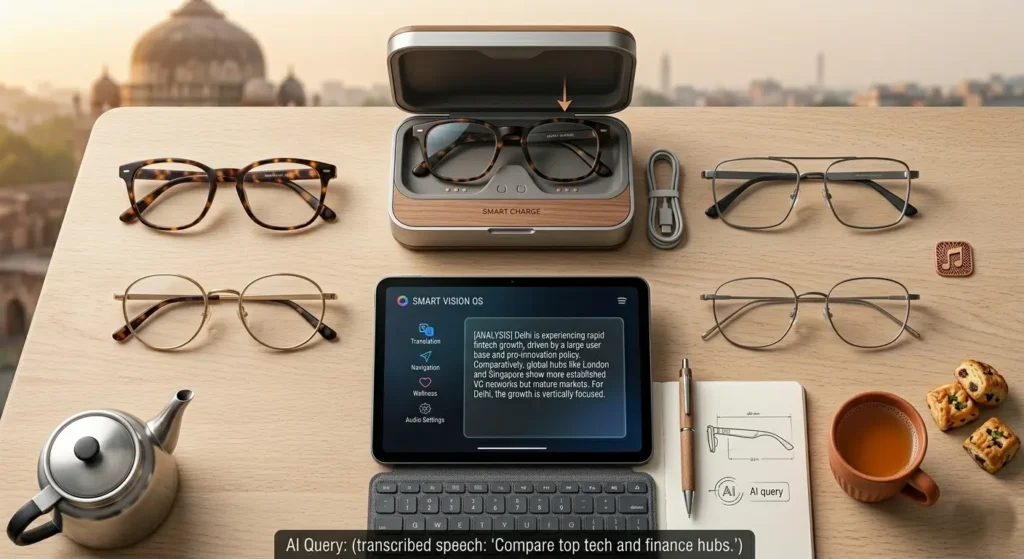
These glasses are genuinely exciting, but they’re not perfect yet. Here’s what to keep in mind if you’re thinking about making the jump.
Battery life is still a work in progress. Most Digital glasses give you 4–6 hours of mixed use, with charging cases extending that. For a full day of heavy use, you’ll want to plan around that. It’s improving fast — but it’s not there yet.
Privacy matters. Some smart glasses have cameras. That’s a powerful feature, but it comes with responsibility. Most reputable brands include visible indicator lights that show when the camera is active. Know what your device is capturing and when.
AR is coming — but isn’t fully here yet. The most exciting AR glasses features are either expensive or still maturing. If you want the full heads-up display experience right now, expect to pay a premium. By 2027, analysts expect AR smart glasses to become significantly more affordable and capable.
Design is finally a real consideration. The days of choosing between ugly-but-functional and pretty-but-useless are over. In 2026, you can find smart glasses that genuinely look good. Don’t settle for a pair that embarrasses you to wear in public — the options exist to avoid that.
Frequently Asked Questions
Q: What exactly are smart glasses? They are wearable eyewear with built-in technology — typically including speakers, microphones, cameras, AI assistants, and in some models, small displays. They enhance your real-world experience with digital information and connectivity without blocking your vision like a VR headset.
Q: Are smart glasses worth buying in 2026? If you’re an early adopter who values hands-free convenience, AI assistance, and cutting-edge wearable tech, yes — smart glasses in 2026 offer genuine utility. For mainstream buyers, the technology is approaching but hasn’t fully hit that “obvious purchase” threshold yet. That moment is likely 12–24 months away.
Q: What’s the difference between smart glasses and AR glasses? All AR glasses are smart glasses, but not all smart glasses are AR. Basic Digital glasses offer audio, AI, and camera features without displaying visual overlays. AR smart glasses add a display projected onto the lens, overlaying digital information directly onto your field of view.
Q: Can these glasses replace smartphones? Not yet — but that’s the direction the industry is clearly heading. The goal for companies like Meta and Google is to make smart glasses a “companion device” to your phone first, then gradually take over more of what your phone currently does. Full smartphone replacement is likely 5–10 years away.
Q: Are smart glasses safe to use? Yes, for most everyday use cases. The main considerations are the camera feature (privacy for those around you) and near-eye display exposure for AR models (still being studied for long-term effects). Using reputable brands that are transparent about their technology is always advisable.
Q: Are there affordable smart glasses options? Yes. Entry-level smart glasses with audio and AI features now start around $150–$200 globally. As competition increases and production scales up, prices for capable AI glasses are expected to drop significantly through 2026 and beyond.
Final Thoughts
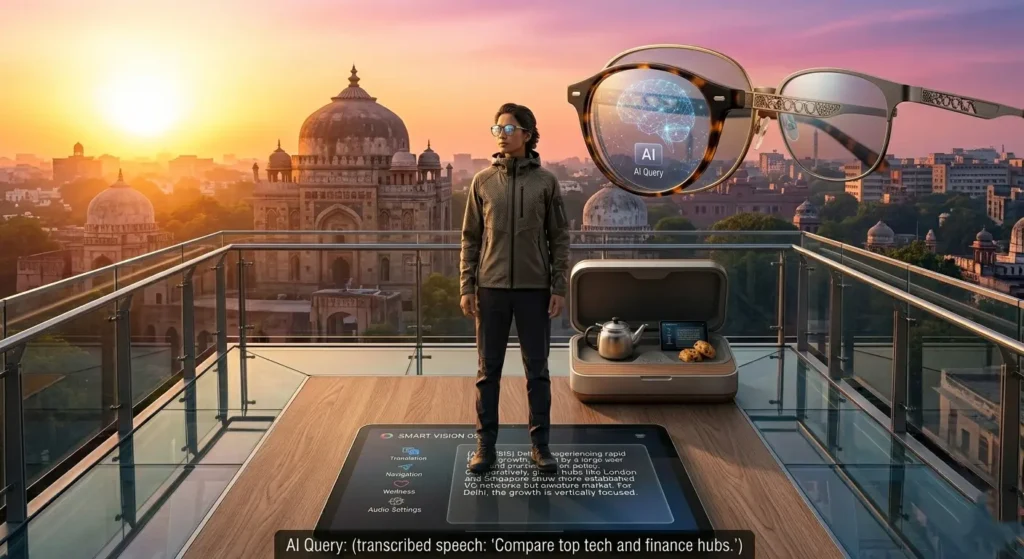
Here’s the honest version of where things stand: smart glasses are not the future anymore. They’re the very early present — messy, imperfect, and genuinely exciting all at once.
The technology has finally grown up enough to be useful. The designs have finally grown up enough to be wearable. And the companies building them have finally grown up enough to understand that people want intelligence that fits into their life — not a gadget that makes their life fit around it.
Whether you buy a pair today or wait for the next generation, one thing is clear: smart glasses are reshaping what eyewear means. And the gap between “glasses you wear” and “glasses that work for you” is closing faster than most people realize.
Explore our latest collection of stylish eyewear and smart-ready frames — designed for people who care about how they see the world, and how the world sees them.
Curious about a specific model or wondering which style suits you best? Drop your question in the comments — we’re always happy to help.
Behind every great product recommendation is a well-researched content strategy. Our team is backed by expert digital marketing professionals who ensure you always get accurate, helpful buying guides — not just sales copy.