

You know that moment when you’re trying to read the menu at a restaurant and you’re holding it just a little bit further away than you used to? Or when you’re squinting at your phone screen and thinking, my screen must need adjusting – but deep down you know the screen is perfectly fine?
Yeah. That’s your eyes trying to tell you something.
Most of us don’t notice when our vision starts slipping. It happens gradually — so gradually that you adapt without even realizing it. You sit a little closer to the TV. You zoom into text more often. You stop reading in dim light because it’s “too tiring.” But these small adjustments add up to one clear message: it might be time for new glasses.
This guide covers the most important signs you need new glasses, what each symptom means, and when you really can’t afford to wait.
Table of Contents
Why We Ignore the Signs (And Why That’s a Problem)
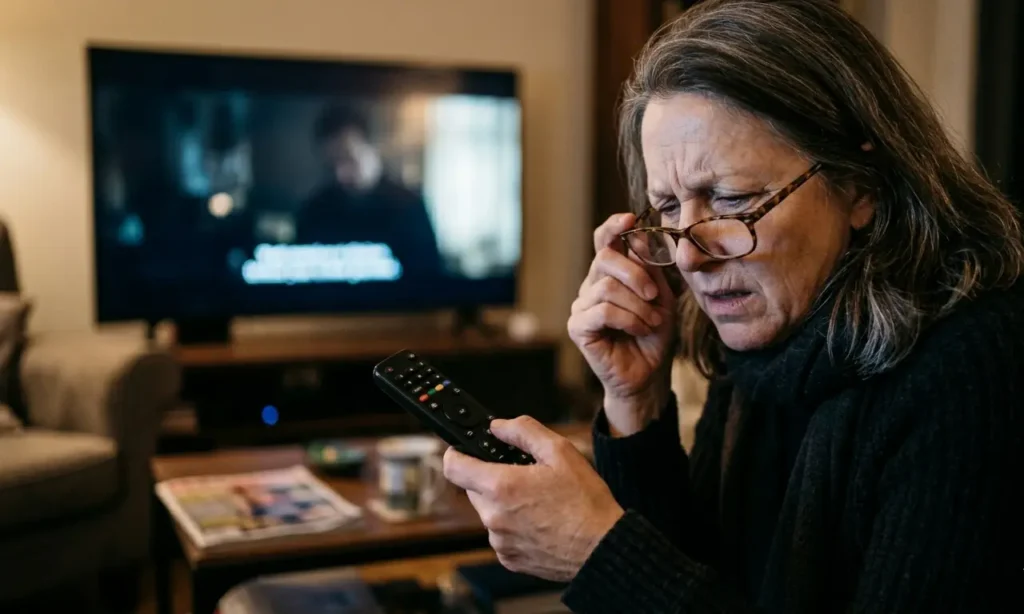
Here’s the honest truth: most people wait way too long to get their eyes checked.
Vision changes are sneaky. Unlike a broken arm or a fever, they creep up slowly. Your brain is incredibly good at compensating — adjusting, adapting, and making do with whatever it gets. So by the time your vision has noticeably deteriorated, it’s usually been declining for months, sometimes years.
And those compensations? They come with a cost. Chronic headaches. Constant eye fatigue. Difficulty concentrating. Problems you’ve probably been blaming on stress, bad lighting, or “just getting older.”
Recognizing the signs you need new glasses early can prevent all of that — and save your eyes a lot of unnecessary strain in the process.
10 Clear Signs You Need New Glasses
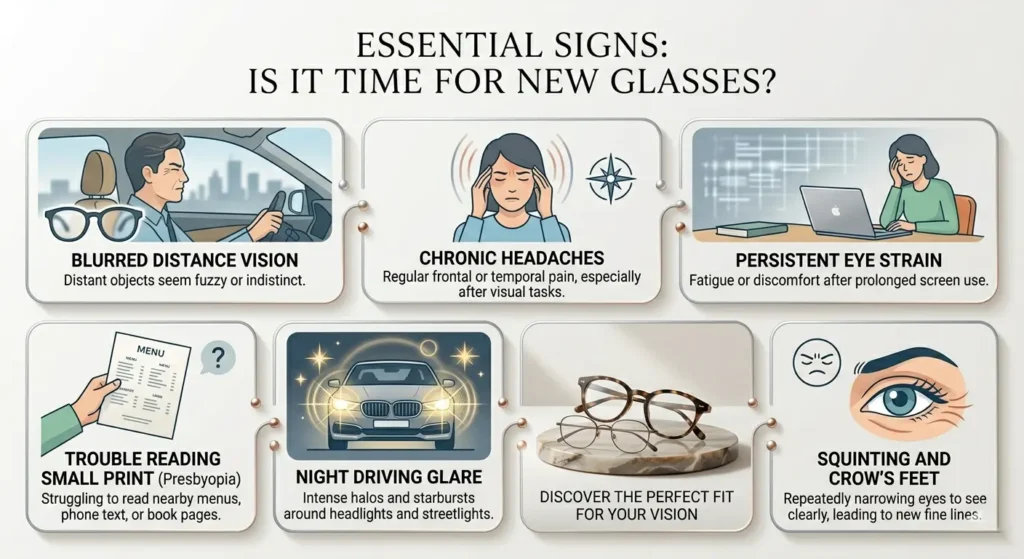
1. Blurry Vision That Wasn’t There Before
This is the most obvious one — and the one people ignore the longest.
If things that used to be sharp now look hazy, fuzzy, or out of focus, your prescription has almost certainly changed. Blurry vision can affect your distance (struggling to read street signs while driving), your close-up sight (squinting at your phone or a book), or both.
The three most common culprits are myopia (nearsightedness), hyperopia (farsightedness), and astigmatism — an irregular cornea shape that blurs vision at all distances. All three are easily corrected with updated prescription lenses.
Don’t normalize blurry vision. It’s not your “new normal.” It’s a signal.
2. Frequent Headaches – Especially After Screen Time
If you’re getting headaches regularly, especially in the afternoon or after long stretches of reading or screen work, your eyes may be the reason.
When your glasses prescription is outdated, your eye muscles work overtime to try to bring things into focus. That sustained effort creates tension — and that tension turns into headaches, usually around the forehead, temples, or behind the eyes.
Recurring headaches, especially after screen time or reading, often point to eye strain. When your eyes have to work harder to focus, it can cause tension in your forehead or around your temples.
If you find yourself reaching for painkillers mid-afternoon more than you’d like to admit, schedule an eye exam before assuming it’s stress.
3. Squinting to See Clearly
Squinting is your eyes’ way of trying to fix the problem themselves. By narrowing the eyelid opening, you reduce the amount of scattered light entering your eye and temporarily sharpen your focus. It works — but only for a second, and at a cost.
Squinting is a sign your eyes are straining to focus, which could indicate you need glasses or an updated prescription.
If you’re squinting to read signs, watch TV, or use your phone — and you’re doing it daily — that’s one of the clearest signs you need new glasses. Don’t let your eyes work harder than they have to.
4. Eye Strain and Tired Eyes by Midday
Do your eyes feel heavy, sore, or just exhausted by the middle of the day? Not because you had a late night, but just… constantly?
Tired or aching eyes can be a sign of eye strain, which happens when your eyes are working too hard. When your vision prescription is off, your eyes are essentially in a constant state of effort — trying to focus, adjust, and compensate every waking hour.
This is especially common for people who spend long hours looking at screens. Digital eye strain has become one of the most widespread vision complaints, and an updated prescription — sometimes with blue light filtering lenses — can make a dramatic difference.
5. Difficulty Seeing at Night
If driving at night has started to feel stressful — or if you’ve started avoiding it altogether — pay attention to that.
Poor night vision can be a sign of an outdated prescription, early-stage astigmatism, or changes in how your eyes handle low light. You might notice halos around streetlights, starburst effects from oncoming headlights, or just a general fuzziness after dark that didn’t used to be there.
If you notice increased difficulty seeing in low-light conditions or halos around lights, or if you have trouble distinguishing objects in dim environments, you may need vision correction.
Night vision problems are one of the most important signs you need new glasses — not just for comfort, but for safety.
6. You’re Holding Things Further Away (or Closer) Than Before
Have you started holding your phone at arm’s length to read messages? Or maybe you’re pressing books and menus almost to your nose to make out the words?
Both are telling signs. Holding things further away is often an early indicator of presbyopia — the age-related farsightedness that typically begins affecting people in their early 40s as the eye’s lens gradually stiffens. Holding things too close often signals myopia or worsening nearsightedness.
If you’ve never had glasses in your life, but suddenly find yourself holding books, menus, and instruction manuals at an arm’s distance away to read them, it might be time to make an appointment.
Either way, your arms shouldn’t be compensating for your eyes.
7. Double Vision
Seeing two images of the same object — even briefly — is not something to brush off.
Double vision, medically called diplopia, can result from refractive errors, eye muscle imbalances, or in some cases, more serious underlying conditions. The treatment for double vision often involves new glasses. Sometimes, glasses to correct double vision are fitted with special prism lenses.
If double vision is something you’re experiencing, even occasionally, get an eye exam as soon as possible. This is one of those signs you need new glasses that should never be postponed.
8. Light Sensitivity
Are you finding yourself wincing in bright rooms? Does walking from a shaded area into sunlight feel more jarring than it used to?
Light sensitivity, also known as photophobia, can be a sign of astigmatism. So if your eyes are super-sensitive to light, either indoors or outdoors, an updated prescription could correct the issue.
It can also indicate that your current lenses aren’t providing adequate UV or glare protection. Either way, increased sensitivity to light is a clear indicator that your current glasses aren’t doing the full job anymore.
9. Your Frames Are Damaged or Ill-Fitting
Sometimes the signs you need new glasses aren’t about your vision at all — they’re about the glasses themselves.
Bent frames change how your lenses sit in front of your eyes, which directly affects how your lenses correct your vision. Even a slight tilt or misalignment can cause blurry spots, distortion, or uneven vision. If your frames are twisted, scratched, or the nose pads have shifted, you may be correcting for a distortion that isn’t even a vision change — just damaged hardware.
Scratched lenses are another one. A few surface scratches might seem minor, but they scatter light in ways that can increase eye strain and reduce clarity without you even noticing.
10. It’s Been Over a Year Since Your Last Eye Exam
This one is simple: if you can’t remember the last time you had your eyes checked, that’s long enough.
Regular eye exams let your doctor track changes and update your prescription as needed. Many adults don’t notice how much their vision has shifted until they’re wearing the correct glasses and realize the difference.
Adults should generally have a comprehensive eye exam every one to two years, even if they feel their vision is fine. Vision changes can be subtle — so subtle that you adapt without realizing it. A routine exam catches those shifts before they turn into bigger problems.
What Happens If You Ignore These Signs?
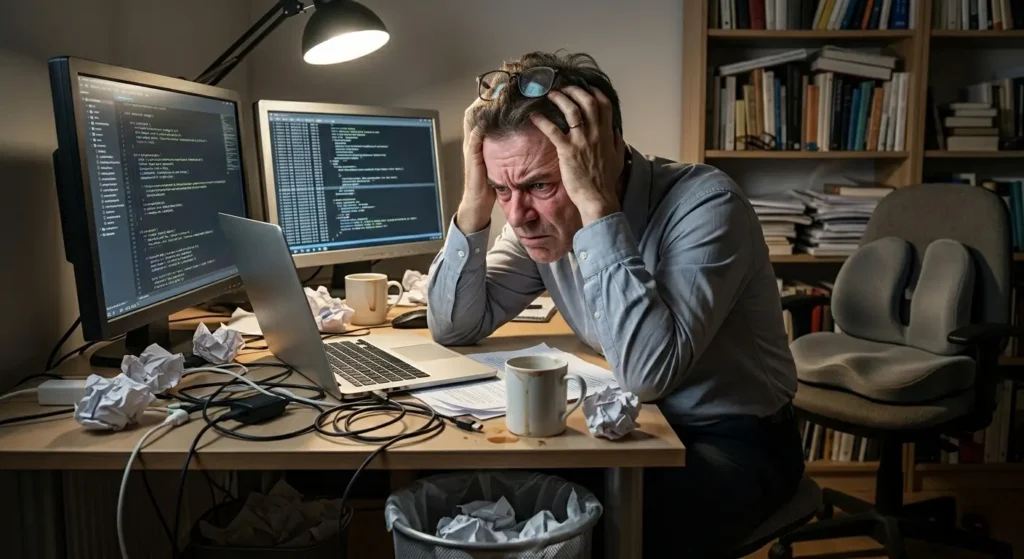
It’s tempting to put off updating your glasses, especially when life is busy and the symptoms feel manageable. But ignoring the signs you need new glasses for too long has real consequences.
Chronic eye strain can lead to persistent headaches and neck tension. Squinting becomes a habit that strains your facial muscles. Poor night vision puts you at risk on the road. And wearing an outdated prescription — especially for children — can actually slow down visual development or worsen existing conditions.
Your vision is one of your most essential senses. It’s worth a little attention.
What to Look for in Your Next Pair of Glasses
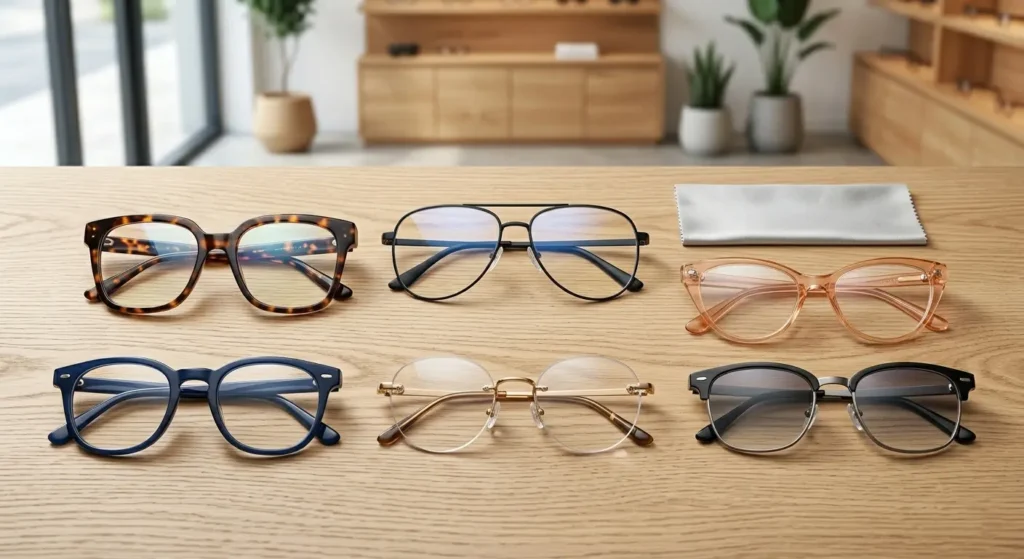
Once you’ve confirmed it’s time for an update, here are a few things to keep in mind when shopping for new eyewear:
Lens type matters. Single-vision lenses work for straightforward nearsightedness or farsightedness. Progressive lenses handle multiple focal distances without a visible line. If you spend hours at a screen, ask about computer glasses or blue-light filtering lenses specifically designed for digital eye strain.
Lens coatings add real value. Anti-reflective coatings reduce glare — especially useful for driving and screen time. UV protection is essential for outdoor use. Anti-scratch and anti-fog coatings extend the life of your lenses significantly.
Frame fit affects vision quality. Even the right prescription delivers poor results in frames that don’t fit properly. Make sure your lenses sit centered in front of your pupils and that the frames rest comfortably without sliding.
Frequently Asked Questions
Q: How do I know if I need new glasses or just need a stronger prescription? Both often go hand in hand. If you’re experiencing any of the symptoms listed above — blurry vision, frequent headaches, eye strain — it’s a sign your current prescription may no longer match your vision. The only way to know for certain is a comprehensive eye exam with an optometrist.
Q: Can eye strain be fixed without new glasses? Sometimes, yes — taking regular breaks from screens, improving lighting, and practicing the 20-20-20 rule (every 20 minutes, look 20 feet away for 20 seconds) can reduce digital eye strain. But if strain persists despite these habits, outdated glasses are likely the root cause.
Q: How often should I get my eyes checked? Most eye care professionals recommend adults have a comprehensive eye exam every one to two years. If you’re over 40, have diabetes, or have a family history of eye disease, annual exams are advisable.
Q: Are the signs you need new glasses the same for children? Many symptoms overlap — squinting, sitting too close to screens, frequent eye rubbing, and complaining of headaches are all common signs in children. Kids often can’t articulate vision problems, so regular eye exams starting from school age are especially important.
Q: Can I still buy glasses online if I already have a prescription? Yes — as long as your prescription is current (within the last one to two years) and you know your pupillary distance (PD), buying glasses online is a convenient, cost-effective option for many people.
Final Thoughts
Your eyes don’t always shout when something’s wrong. They whisper — through a headache here, a squint there, a little extra screen brightness that you keep bumping up. The signs you need new glasses are easy to overlook, precisely because they creep in so gradually.
But now that you know what to watch for, you’re in a much better position to catch those changes early and do something about them.

Don’t wait until your vision is noticeably bad. Don’t normalize constant headaches or tired eyes. And definitely don’t keep adjusting the font size on your phone and calling it fine.
Treat your eyes the same way you’d treat any other part of your health: with regular attention and the right tools.
Browse our full collection of prescription glasses, blue-light blocking eyewear, and progressive lenses — designed for real life, every day clarity, and long-term eye comfort.
Have questions about finding the right frames or lenses for your needs? Drop a comment below or reach out to our team – we’re here to help you see your best.
No matter what your vision needs are, finding the right fit starts with the right collection – browse our full range of glasses and eyewear designed for everyday comfort, style, and clarity.
The way people shop for eyewear has completely changed — discovery now happens online before anyone walks into a store. Understanding how that works is something our digital marketing professionals specialize in every single day.