
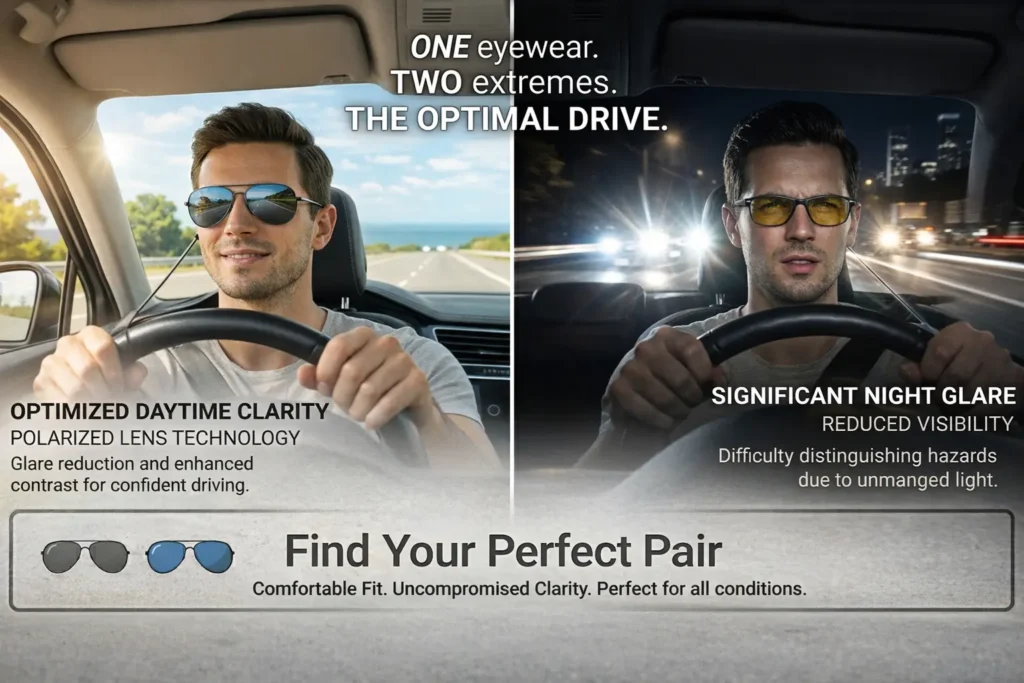
We’ve all been there — you’re cruising along the highway and suddenly the sun dips to just the right angle to blast straight through your windshield. You’re squinting, shielding your face with one hand, and half-guessing where the lane markings are. It’s uncomfortable, it’s stressful, and honestly, it’s dangerous.
Or maybe it’s the opposite — it’s late at night, you’re tired, and every set of oncoming headlights feels like someone aiming a flashlight directly at your eyes.
Here’s the thing: the right pair of sunglasses can fix both of those problems. But “right” looks very different for day versus night driving. And most people are still grabbing whatever looks good at the checkout counter — which is a mistake that could actually cost them on the road.
If you’ve been searching for the best sunglasses for driving day and night, you’ve landed in the right place. This guide breaks it all down in plain language — no fluff, no jargon overload — just what you actually need to know to make a smart, safe choice.
Table of Contents
Why the Best Sunglasses for Driving Day and Night Are Worth the Investment
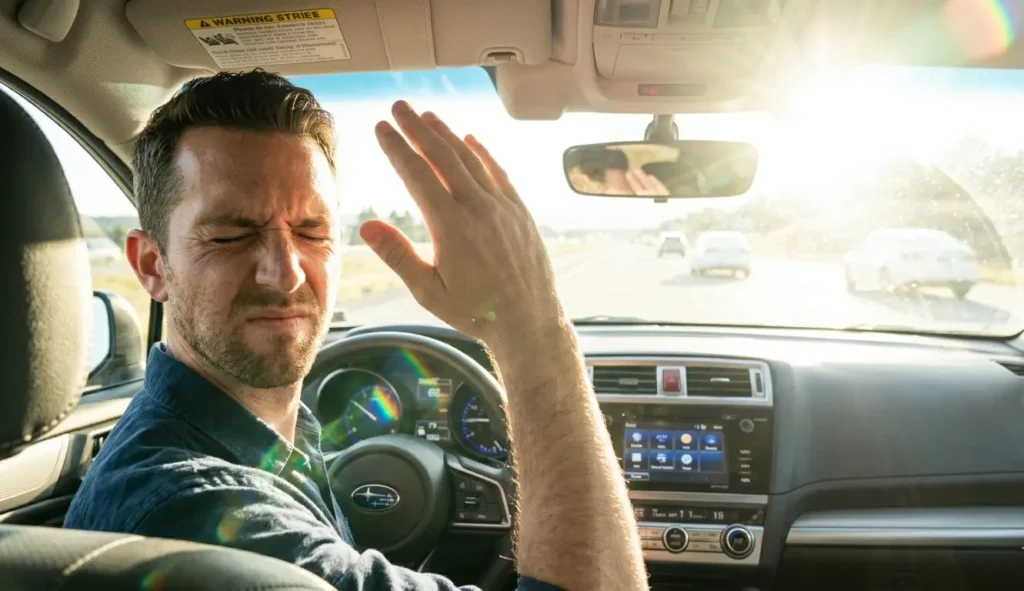
A lot of drivers treat sunglasses like an afterthought. You grab a cheap pair from a gas station, toss them on the dashboard, and think, good enough. But here’s what’s actually happening to your eyes while you drive.
Glare from the sun bouncing off wet roads or other car hoods slows your reaction time. UV rays — even on cloudy days — quietly damage your eyes over years of cumulative exposure. And at night, that awful glare from LED headlights? It’s not just annoying — it creates real blind spots that last a few seconds longer than you’d think.
The right driving eyewear reduces all of that. It’s not about looking cool (though that’s a bonus). It’s about seeing clearly and getting home safely.
The tricky part is that what protects your eyes in broad daylight can actually hurt your vision at night. That’s why finding the best sunglasses for driving day and night — ones that genuinely work across both conditions — matters more than most people realize.
What to Look for in Driving Sunglasses
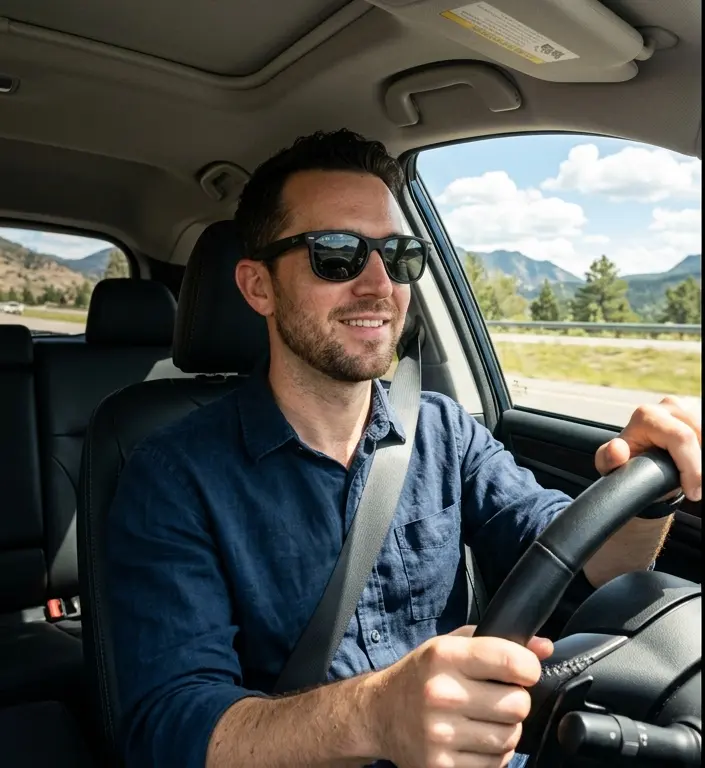
Before we get into what to buy for day vs. night, let’s cover the features that matter most across the board.
1. Polarized Lenses — The Day Driving MVP
If you drive often during the day, polarized lenses are probably the single best upgrade you can make. They work by filtering out horizontal light waves — the kind that bounce off flat surfaces like roads, car hoods, and wet pavement — and the difference is immediately noticeable. That sharp, blinding glare just… disappears.
The result is a calmer, clearer view of the road. You stop squinting. Your eyes stop fatiguing halfway through a long drive.
One thing to watch out for: If your car has an LCD-based dashboard display (like many modern vehicles), some polarized lenses can make the screen look distorted or washed out at certain angles. It’s worth testing before committing to a pair.
2. UV400 Protection — Non-Negotiable
Here’s a simple rule: if the sunglasses don’t say UV400, don’t buy them for driving.
UV400 means the lenses block 100% of UVA and UVB rays up to 400 nanometers. Dark lenses without UV protection are actually worse than wearing nothing — your pupils dilate behind dark lenses, letting in more harmful UV light than if you were squinting in the sun.
Always check the label. It should say “UV400” or “100% UV Protection.” If it doesn’t, move on.
3. Photochromic (Transition) Lenses — One Pair for All Conditions
Photochromic lenses automatically adjust their tint based on light levels. They darken in bright sun and clear up in low light — making them a smart pick for drivers who switch between open roads and tunnels, or who drive during dawn and dusk.
The catch? Most standard photochromic lenses react to UV light, and your windshield actually blocks UV. That means they might stay stubbornly dark — or fail to darken at all — while driving. If you go this route, look specifically for lenses marketed as “driving photochromic” or ones that respond to visible light changes, not just UV.
4. Anti-Reflective (AR) Coating — Your Night Driving Ally
Anti-reflective coatings cut down the internal reflections that cause the halo and starburst effects you see around headlights at night. If you’ve ever noticed rings around streetlights while driving, AR coating is the fix.
This feature is especially valuable if you drive a lot in the city after dark.
5. Lens Material — Comfort Over Long Drives
- Polycarbonate — Lightweight, shatterproof, and impact-resistant. Great for daily driving.
- Nylon — Flexible and comfortable for extended wear. A solid all-rounder.
- Glass — The clearest optics, but heavier and more fragile. Better for occasional use than daily commutes.
6. Frame Fit — More Important Than You Think
Sunglasses that slide down your nose or press unevenly on your temples are not just annoying — they’re distracting. On the road, distraction is the last thing you need.
Look for a snug but comfortable fit, and consider wraparound frames if you drive on wide roads or highways. They cut out side glare that regular frames let in from the periphery.
Best Lens Colors for Driving: Day vs. Night
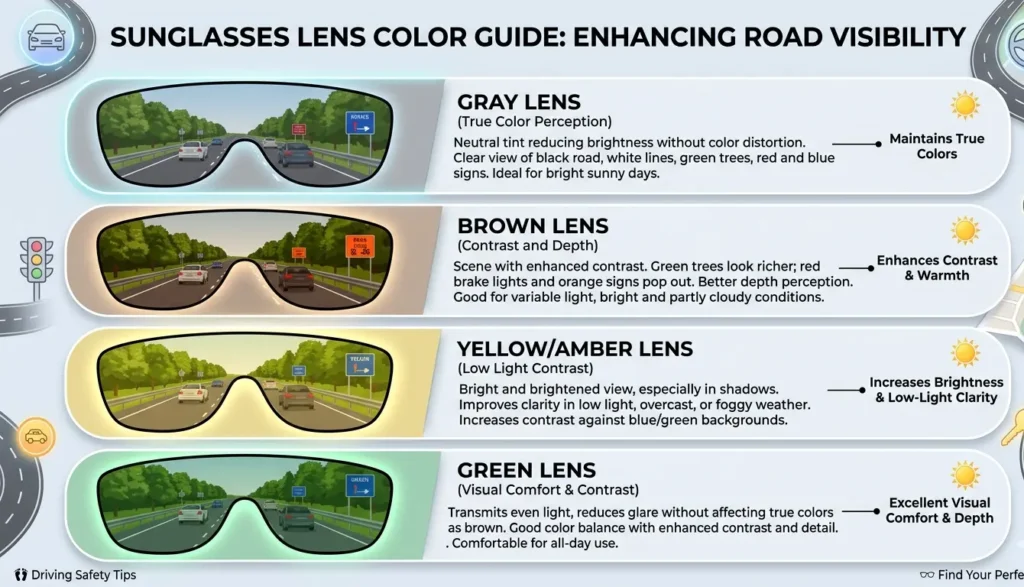
The color of your lens tint changes what you see more than most people realize. When shopping for the best sunglasses for driving day and night, this is one of the most important decisions you’ll make. Here’s a simple breakdown:
| Lens Color | Best For | What It Does |
| Gray | Bright, sunny days | Reduces brightness without distorting colors — ideal for road visibility |
| Brown / Amber | Hazy, cloudy, or foggy days | Boosts contrast and depth perception |
| Yellow / Gold | Low-light, dusk, night driving | Enhances contrast and cuts blue-light glare from headlights |
| Green | All-purpose use | Mild contrast boost with a neutral color tone |
| Clear / Light tint | Night driving | Lets in maximum light — best paired with AR coating |
Bottom line: gray or brown for day, yellow or clear for night. And please — never wear dark lenses after sunset. They make the road harder to see, not easier.
Best Sunglasses for Driving During the Day: What to Actually Buy
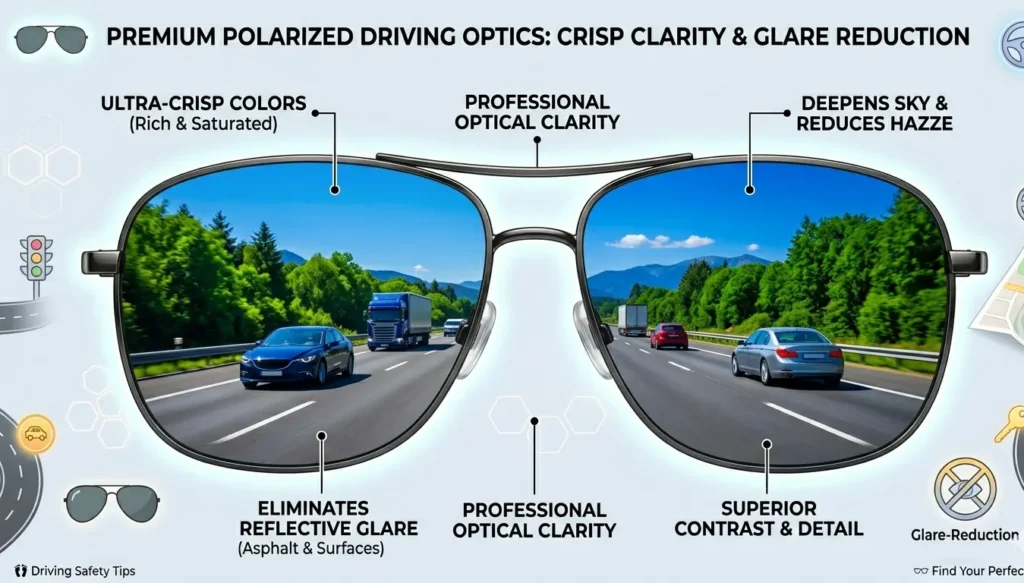
When the sun is up, your eyes are fighting glare and UV radiation. Your sunglasses need to do the heavy lifting here.
The best sunglasses for driving day and night should always start with a strong daytime option. Here’s what a solid pair looks like:
- Polarized gray or brown lenses — top pick for blocking road glare while keeping colors accurate
- UV400 certified — mandatory, full stop
- VLT (Visible Light Transmission) of 10–25% — the right darkness level for strong sunlight
- Wraparound or semi-wrap frame — protects from side glare on open roads
- Mirrored coating (optional) — great for extreme brightness like beach or mountain driving
These work best for: highway drives, beach road trips, mountain roads, and any time the sun is relentlessly in your face.
Best Glasses for Night Driving: A Different Game Entirely
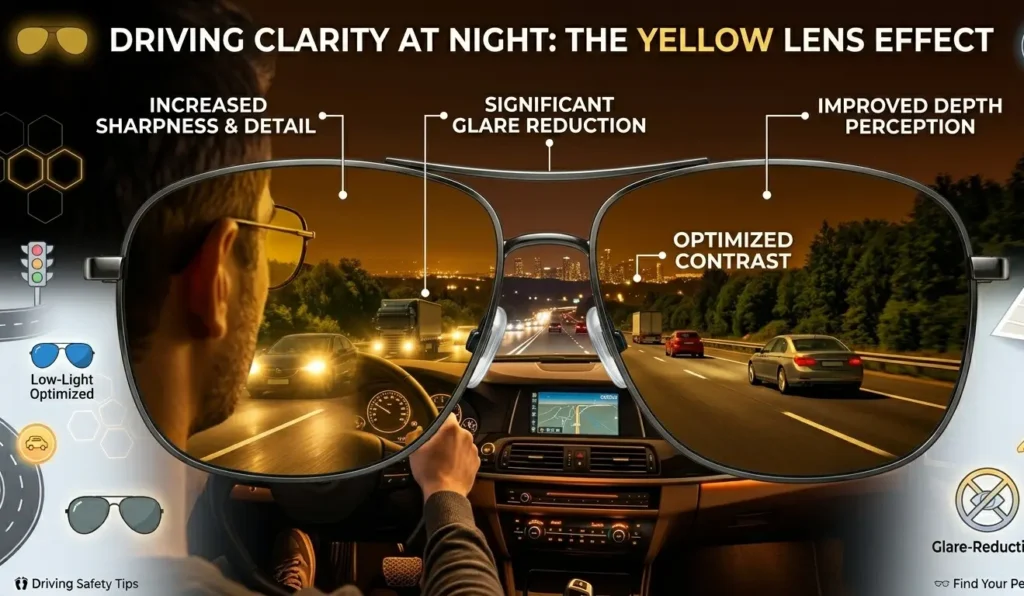
Night driving is where a lot of people get it wrong. They assume darker = better, or they just drive without any eyewear at all. Both are mistakes.
At night, your eyes need to gather as much light as possible — while also managing the harsh glare of oncoming headlights. The best sunglasses for driving day and night include a night-specific option that handles this balance well.
Here’s what actually helps after dark:
- Yellow-tinted lenses — the most recommended option for night driving. They filter out harsh blue-spectrum light from LED headlights without making the road too dark to see.
- Anti-reflective coating — reduces halos and starbursts around lights, so oncoming headlights feel less aggressive
- High VLT (80–100%) — lets in enough light to see the road clearly
- Lightweight frame — because comfort matters when you’re tired and driving late
What to skip at night: dark tints, polarized lenses, and mirrored coatings. All of these reduce the light your eyes receive — exactly the opposite of what you need after dark.
A note for prescription wearers: Night driving glasses don’t replace your prescription lenses. If you have astigmatism or other vision issues, those headlight halos might be partly a vision problem, not just a glare problem. Talk to your optometrist before switching things up.
7 Practical Tips Before You Buy
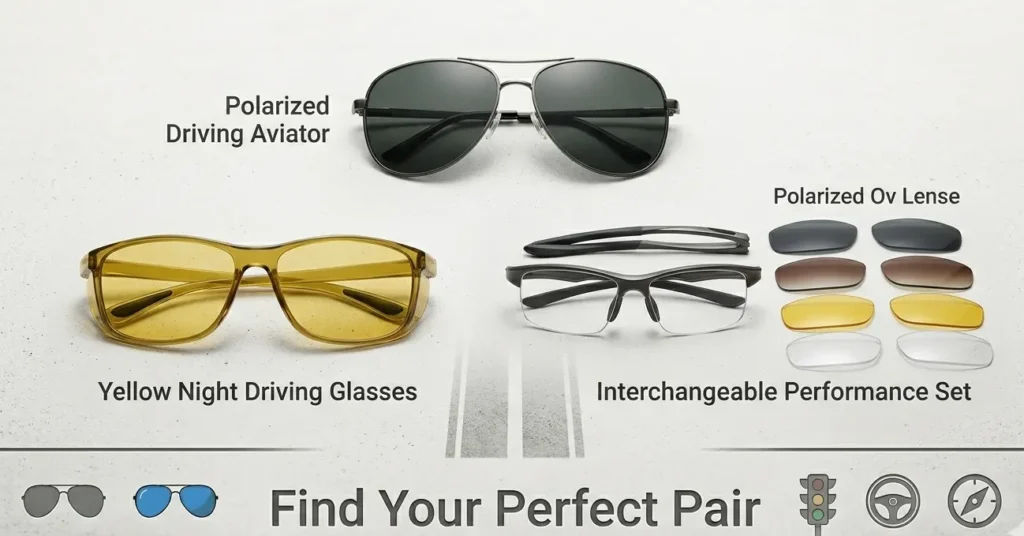
Shopping for driving sunglasses doesn’t have to be complicated. Whether you’re picking up your first pair or upgrading to the best sunglasses for driving day and night, these seven tips will save you from a purchase you’ll regret.
- Match the lens to your driving conditions. Do you mostly drive in the mornings? Late evenings? Long daytime road trips? Your lens choice should match your real-world routine, not some ideal scenario.
- Always check for UV400. No exceptions. A cheap pair with UV400 beats an expensive pair without it.
- Test the fit properly. Put them on, shake your head, look down. If they slide, they’ll slide at 100 km/h too. Find a pair that stays put.
- Look into interchangeable lens styles. Some sunglasses come with swappable lenses — one tinted pair for day, one yellow pair for night. It’s a genuinely smart investment if you drive in both conditions regularly.
- Don’t sacrifice optics for style. Distorted or blurry lenses are a safety risk at speed. If the world looks slightly “off” through a lens, trust that instinct and move on.
- Prescription wearers have options. Fitover sunglasses and prescription-compatible frames are widely available. You don’t have to compromise.
- Pay attention to coatings. Anti-scratch, anti-fog, and anti-reflective coatings make a real difference in day-to-day usability — especially if you drive in varied weather.
Frequently Asked Questions
Q: What are the best sunglasses for driving day and night? The best option combines a polarized, UV400-certified pair for daytime use (gray or brown tint) with a yellow-tinted anti-reflective pair for night driving. If you want one versatile pair, look for interchangeable lens styles or a photochromic lens designed specifically for in-car use.
Q: Can I just use my regular sunglasses for driving? You technically can, but they might not be doing you any favors. Regular fashion sunglasses often lack the polarization, proper tint, and UV400 certification that driving conditions actually demand. You might be shielding your eyes from brightness without actually reducing glare or blocking UV rays.
Q: Are polarized sunglasses okay to wear at night? No — and this is a common mistake. Polarized lenses are built to reduce glare in bright light. At night, they end up cutting the light your eyes need to see the road clearly. Stick to yellow-tinted or clear anti-reflective lenses after dark.
Q: What lens color is best for driving at night? Yellow or amber. These tints filter out the blue-spectrum light that makes LED headlights so harsh, while still letting enough light through to see the road without straining. They’re the go-to for night drivers for a reason.
Q: Are transition/photochromic lenses worth it for driving? They’re convenient, but standard versions have a quirk — car windshields block UV light, which is what triggers the tint change. This means your lenses might not darken when you need them to, or stay dark when you don’t. Look for photochromic lenses specifically designed for in-car use.
Q: Can glasses actually help with headlight glare at night? Yes, genuinely. Yellow-tinted lenses with an anti-reflective coating can significantly reduce the intensity of oncoming headlights. If you’ve been white-knuckling nighttime drives because of blinding high beams, the right glasses can make a real difference.
Q: What does UV400 mean on sunglasses? It means the lenses block all UV radiation up to 400 nanometers — covering both UVA and UVB rays completely. It’s the highest standard of UV protection available, and the minimum you should accept in any pair of driving sunglasses.
Final Thoughts
At the end of the day (and the night), the best sunglasses for driving day and night are one of the most practical safety investments you can make as a driver. Not a luxury. Not just an accessory. A genuine tool that helps you see better and react faster — whether you’re navigating a sun-soaked highway or squinting through a dark, rainy street.
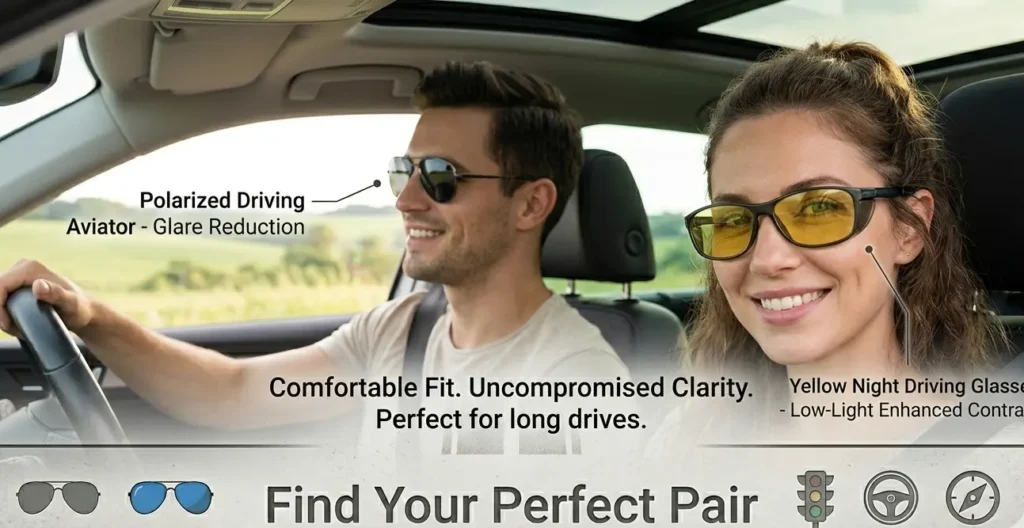
For daytime driving, go polarized with UV400 protection and a gray or brown tint. For nighttime, reach for yellow-tinted or clear lenses with anti-reflective coating. And if you’re constantly switching between both — seriously consider an interchangeable lens pair or a photochromic option built for in-car use.
Your eyes do a lot of work behind the wheel. Give them the right support.
Browse our full collection of polarized driving sunglasses, night driving glasses, and UV400 eyewear — built for drivers who refuse to compromise on safety or clarity.
Got a question we didn’t cover? Drop it in the comments — we read every single one.
Whether you’re looking for polarized shades for the highway or anti-glare lenses for late-night drives, explore our full range of premium driving sunglasses and eyewear — handpicked for comfort, clarity, and road safety.
Behind every great product recommendation is a well-researched content strategy. Our team is backed by expert digital marketing professionals who ensure you always get accurate, helpful buying guides — not just sales copy.